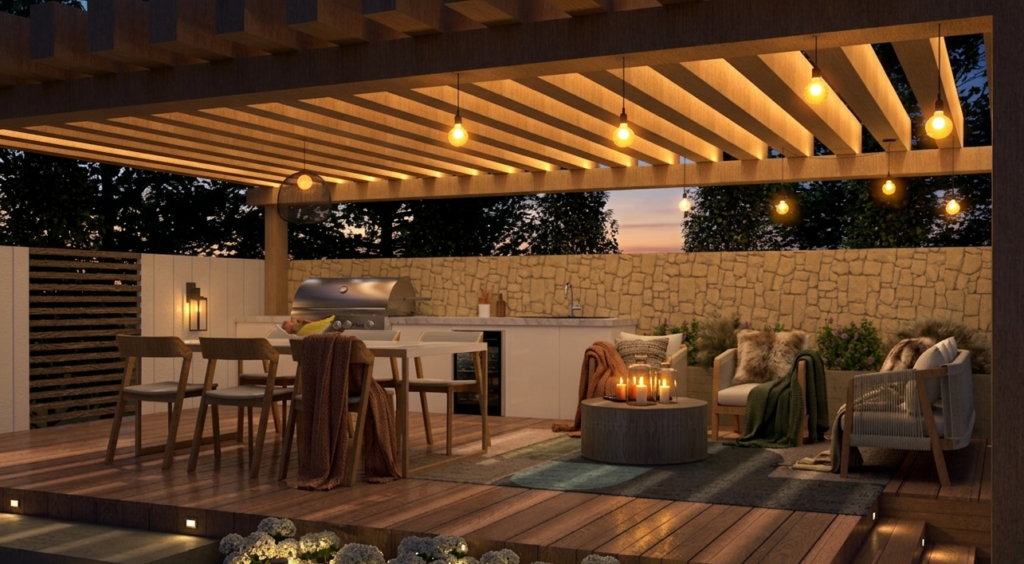
The Texas Outdoor Living Guide: Furniture, Materials and Plants That Actually Work
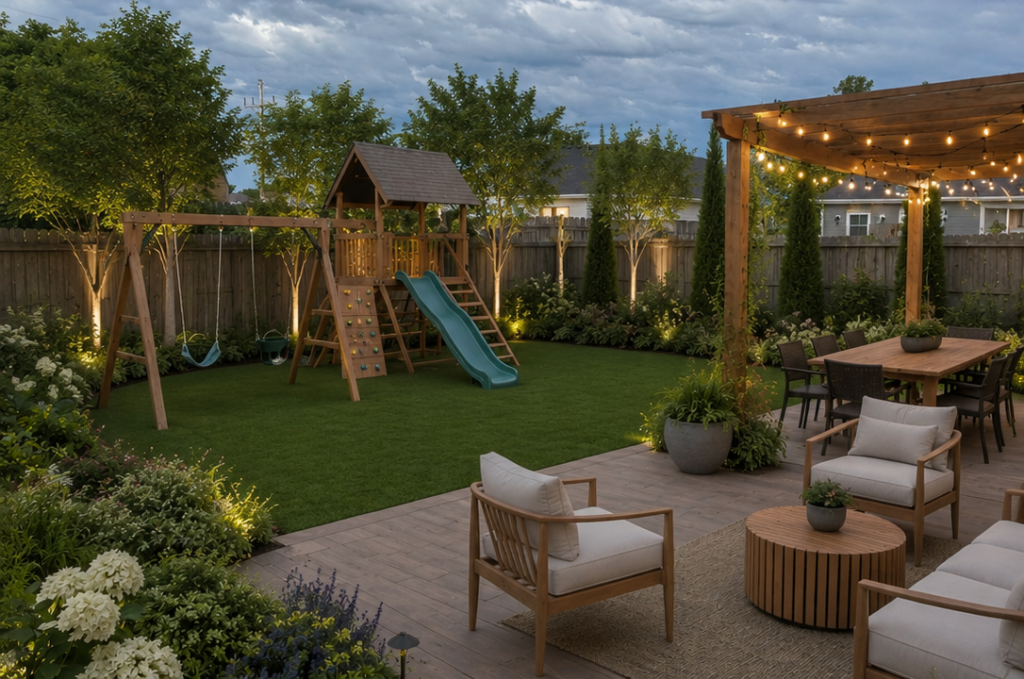
Designing a Texas backyard isn’t complicated. But making decisions that hold up — through triple-digit summers, humidity swings, and years of use — requires knowing what actually works and what looks good in a catalog but fails in real life.
This is that guide.
Part 1 — Outdoor Furniture That Lasts in Texas
Not all outdoor furniture is built for Texas heat. Here’s what to look for:
Teak — naturally weather-resistant, doesn’t warp or crack in heat. Higher investment but lasts decades.
Powder-coated aluminum — lightweight, rust-proof, handles sun and rain without fading. One of the best value options for Texas.
All-weather wicker (resin) — looks great, holds up to UV exposure without cracking like natural wicker does. Make sure it’s resin-based, not natural fiber.
Concrete and stone — for tables and accent pieces, unbeatable durability. Gets hot in direct sun so pair with shade.
What to avoid: untreated wood, iron without rust protection, and any cushion fabric that isn’t solution-dyed acrylic — it will fade and mildew within one season.
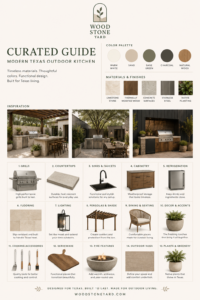
Part 2 — Materials That Survive Texas Heat
For hardscaping and construction, these are the materials that consistently perform:
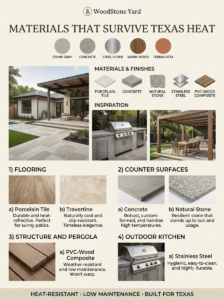
Porcelain tile — heat-resistant, low maintenance, doesn’t absorb stains. Ideal for outdoor kitchen counters and flooring.
Concrete — versatile, durable, holds up to temperature extremes. Can get hot underfoot in direct sun — use in shaded areas or seal with light-colored coating.
Natural stone (limestone, travertine) — stays cooler than concrete in direct sun, beautiful and durable. Slightly more maintenance but worth it aesthetically.
Stainless steel — for outdoor kitchens, the only logical choice. Handles heat, resists rust, easy to clean.
PVC-wood composite — for pergolas, fencing, and cabinetry. Gives you the look of wood without cracking, fading, or termite risk in Texas conditions.
What to avoid: untreated natural wood for structural elements, ceramic tile (cracks in extreme heat), and cheap aluminum that isn’t powder-coated.
Part 3 — Plants That Survive a Texas Summer
The rule in Texas: if it needs constant watering or can’t handle 100°F, it doesn’t belong in your backyard.
Live Oak — iconic Texas shade tree. Dense canopy, evergreen, virtually indestructible once established.
Cedar Elm — fast growing, adapts to any soil, great for creating shade quickly.
Texas Mountain Laurel — fragrant purple blooms in spring, extremely low water needs, stays beautiful year-round.
Bougainvillea — thrives in heat, drought-tolerant once established, adds color and structure to fences and pergolas.
Lavender — heat and drought tolerant, looks beautiful in planters, keeps mosquitoes away naturally.
Agave and succulents — virtually zero maintenance, architectural interest, perfect for low-water zones.
What to avoid: tropical plants that need constant moisture, annuals that won’t survive summer heat, and anything that requires rich soil without amendments — Texas soil is tough.
Every decision in a Texas backyard comes down to one question: will this hold up? The furniture, the materials, the plants — all of it needs to be chosen with the climate in mind, not just the aesthetic.
Start with function. The beauty follows.
Not sure where to start with your own backyard? Grab our free planning checklist — link below.