Texas Backyard Shade Ideas: Why Shade Comes First (And Everything Else Follows)
If you live in Texas, you already know: summer is brutal. And if your backyard has no shade, it doesn’t matter how beautiful your furniture is or how much you spent on that pergola — nobody is going outside.
This is the number one mistake we see in Texas backyard design. Homeowners invest in the aesthetics first and realize too late that the space is completely unusable from May through September.
So before you buy a single piece of furniture, before you call a contractor, before you pin another idea — let’s talk about shade.
Why Shade Is a Design Decision, Not an Afterthought
In most parts of the country, shade is a nice-to-have. In Texas, it’s the whole design. The direction your house faces, where the sun hits your yard at 3pm, how much of your outdoor space is exposed — these things determine everything else: where your dining area goes, where the kids play, where you actually want to sit at the end of the day.
Getting shade wrong means your outdoor kitchen bakes in direct sun. Your lounge area is unusable by noon. Your kids won’t go outside. And you’ve spent thousands of dollars on a space your family avoids.
The 5 Shade Solutions That Actually Work in Texas
Not all shade is created equal. Here’s how to think about your options:
1. Pergola with shade sail or climbing vines
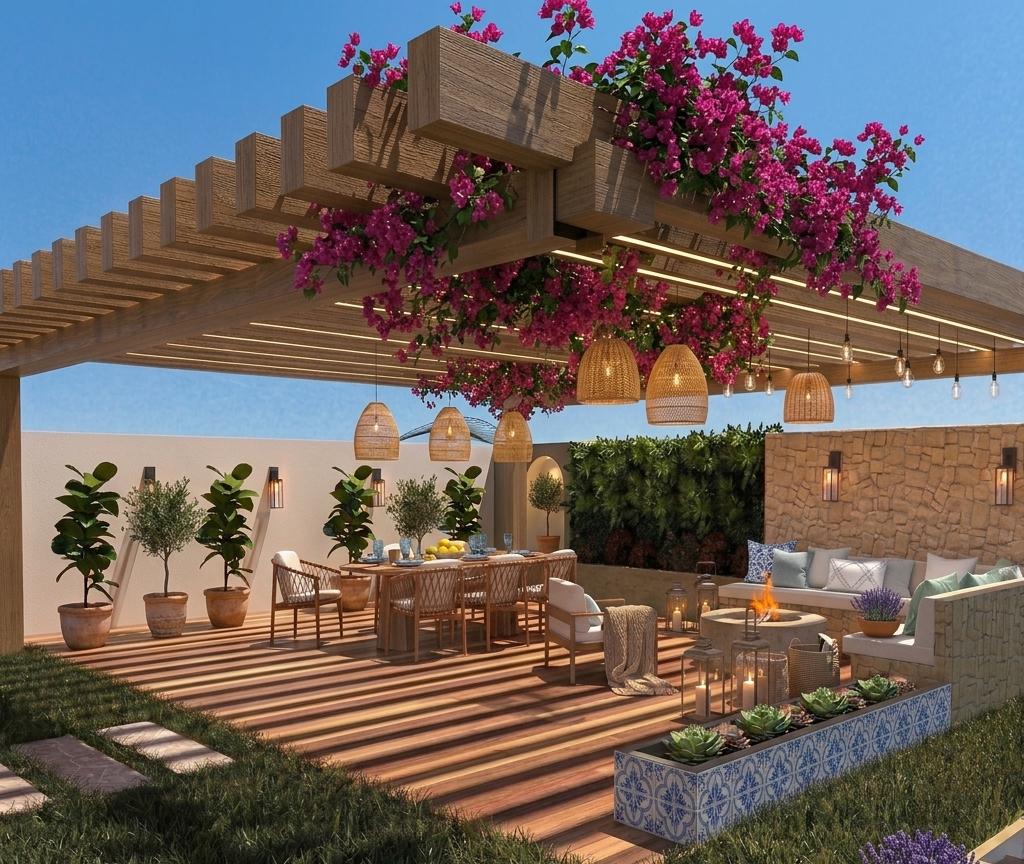
A pergola alone won’t cut it in Texas heat — the open slats let too much sun through. Pair it with a shade sail or train vines like wisteria or bougainvillea for real coverage. Beautiful and functional.
2. Solid patio cover
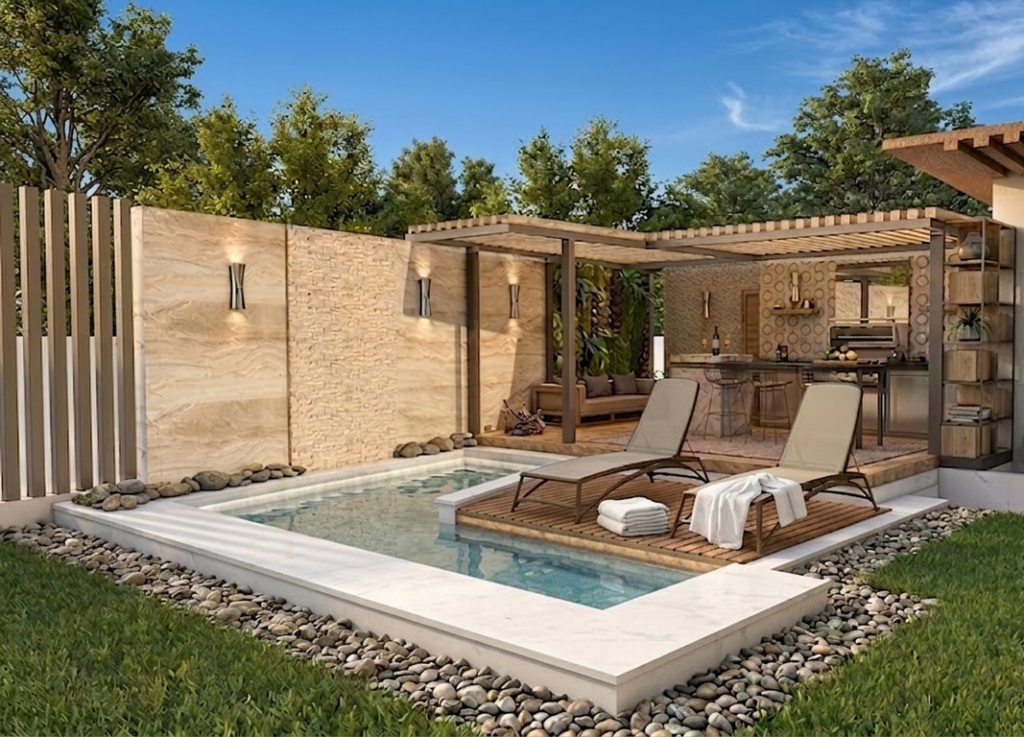
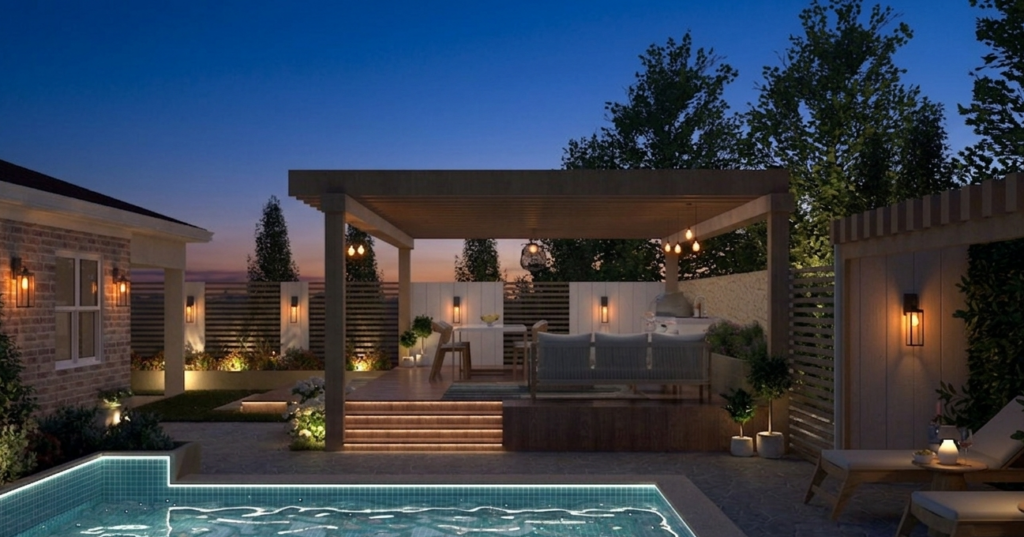
The most effective option for full shade. A solid aluminum or wood cover attached to your house gives you consistent shade and protects your furniture from rain. Less romantic than a pergola, but your family will actually use the space.
3. Large shade trees (native species)
If you’re thinking long-term, native Texas trees like live oak, cedar elm, or Texas mountain laurel are your best investment. They’re drought-resistant, grow well in the heat, and create natural shade that improves every year.
4. Freestanding shade structures
Cantilever umbrellas or freestanding shade sails give you flexibility — you can move them as your needs change. Great for smaller spaces or as a complement to a larger structure.
5. Shade-first zoning
Before you choose any structure, map your yard by sun exposure at different times of day. Your dining zone should sit in the shadiest spot naturally available. Build your layout around where the shade already falls, then enhance it.
How to Design Around Shade
Once you know where your shade goes, everything else falls into place:
— Dining area under the main shade structure
— Lounge zone just outside it, with a secondary shade option
— Kids’ play area in dappled shade from trees or a sail
— Outdoor kitchen positioned to avoid direct afternoon sun
This is the framework we use at WoodStoneYard for every Texas backyard project. It sounds simple, but most homeowners skip this step — and end up with a beautiful space nobody uses.
The Bottom Line
Your Texas backyard can be the place where your family actually lives — where your kids spend their summers, where you host on Friday nights, where the memories happen. But it starts with one decision: solve the shade first.
Everything else follows.
Ready to figure out your backyard’s shade zones? Start with our free checklist — it walks you through the first 5 decisions before you spend a single dollar. CHECKLIST HERE Lin